
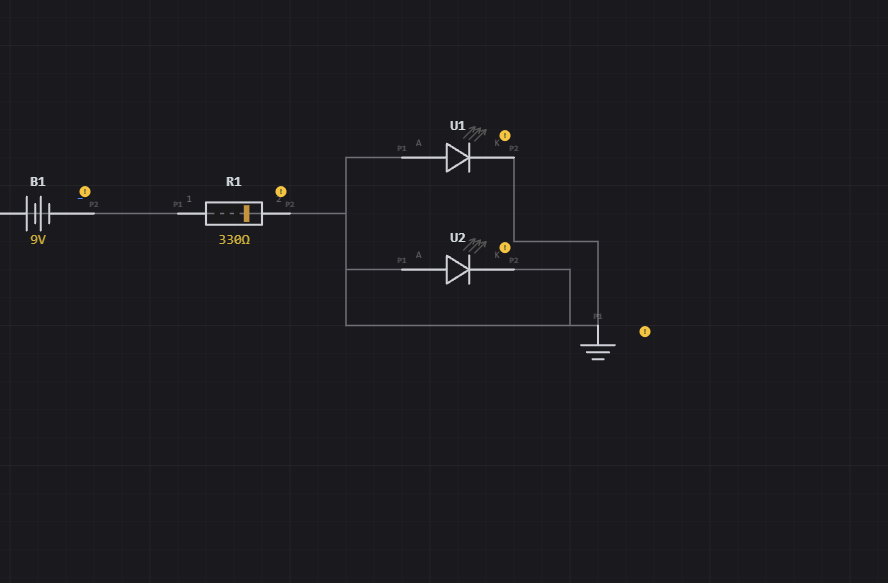
Build it for real
To build this project for real, get the parts from hobidevre.com → hobidevre.com →
More build guides: hobidevre.com/blog
Measure the real current
Put the meter in series with the battery and measure in milliamps while the circuit is active and again while it is idle. A meter in current mode must be in series, never across the battery terminals.
Note both numbers. A circuit that sleeps at 40 mA will empty a small battery in a day, no matter how short the active bursts are.
Find the always-on loads
List everything connected to the battery: the board, sensors, a display, a radio and any indicator LEDs. Disconnect branches one at a time and watch the idle current drop to identify the largest consumer.
Displays and radios are usually the biggest; a backlight left on can dominate the entire budget.
Use a sleep mode
A WiFi board in deep sleep draws a small fraction of its active current. Wake it on a timer or an external pin, take the measurement, send it, and return to sleep immediately.
Remember that deep sleep resets the board, so any state you must keep has to be stored in non-volatile memory.
Power down peripherals
Switch power to sensors and modules with a transistor or a load switch so they are completely off while sleeping. A sensor that is merely idle still consumes current.
Pull-up resistors on an always-connected bus also draw current when a device holds a line low; size them sensibly.
Watch regulator quiescent current
A linear regulator consumes current just by being enabled. Some common regulators draw several milliamps with no load, which can exceed the sleep current of the board itself.
Choose a low-quiescent-current regulator for battery projects, or bypass the onboard regulator and feed the board at the correct point.
Remove wasteful indicators
A power LED with a 1 kΩ resistor can draw a few milliamps continuously. On a battery project, remove it or drive it only during active periods.
Blink a status LED briefly instead of leaving it on; the visual feedback remains while the average current falls sharply.
Account for the battery itself
Capacity depends on chemistry and load. A small alkaline cell suffers under high current pulses and delivers far less than its label suggests, while a lithium cell holds voltage better but needs safe charging.
Self-discharge also matters: a cell left for months loses charge even with no circuit attached. Recheck the battery on its own before blaming the board.
Get the parts
If you want to build this project in real life, you can get the parts from hobidevre.com.
Frequently asked questions
Why does my board drain a battery while switched off?
The regulator and indicators stay active. Add a real power switch or use a low-quiescent-current regulator.
How long will my battery last?
Divide usable capacity in milliamp-hours by average current in milliamps. Measure the current first; estimates from labels are unreliable.
Do I lose variables in deep sleep?
Usually yes, because deep sleep resets the board. Store needed state in non-volatile memory before sleeping.